
Gas leak warning signs and what to do if you smell gas
By Aisha Abbott · Updated 2026-06-19
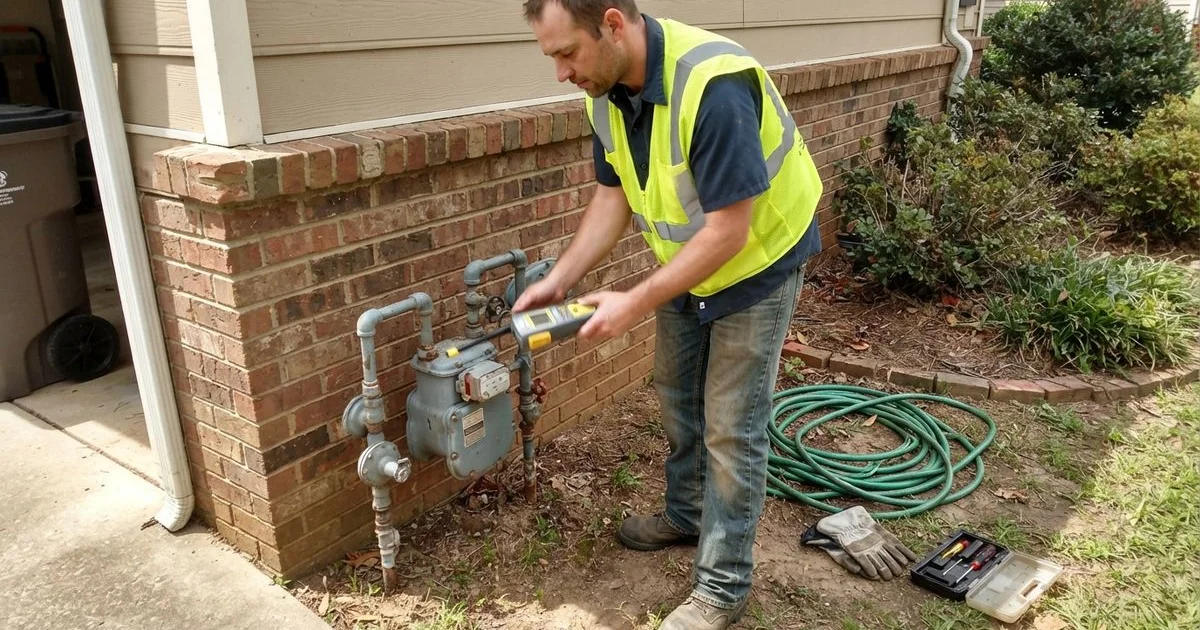
A gas leak is one of the few plumbing-adjacent problems where the right response is not to investigate, it is to leave. Knowing the signs and the correct sequence of actions matters more than almost anything else in this guide. Our directory of Columbia plumbers lists providers with gas-specific certification if you need one after the immediate danger has passed. This is general safety information, not a substitute for your gas utility’s emergency instructions or professional judgment on the scene.
The warning signs
Smell. The most reliable sign is a sulfur or rotten-egg odor, which is the mercaptan additive utilities put into otherwise odorless gas specifically so leaks are detectable.
Sound. A hissing or whistling noise near a gas line, meter, or appliance connection can indicate gas escaping under pressure.
Sight. Dead or dying vegetation in an otherwise healthy area above a buried gas line, or a visible bubbling in wet or puddled ground near a line, can point to an underground leak.
Physical symptoms. Headache, dizziness, nausea, or irritation to eyes and throat with no other explanation, especially if it improves after leaving the house, can indicate gas exposure.
What to do immediately
- Leave the area. Get yourself, family, and pets out of the house or the immediate outdoor area.
- Do not create a spark. Do not flip light switches, use a phone inside the affected area, light a match, or start a vehicle near the smell.
- Do not try to locate or fix it yourself. Leave that to a professional with the right equipment.
- Call from a safe distance. Once you are away from the area, call your gas utility’s emergency line and a licensed plumber with gas certification.
- Do not go back in until your utility or a qualified technician confirms it is safe.
| Sign | What it means | What to do |
|---|---|---|
| Sulfur or rotten-egg smell | Likely gas leak | Leave immediately, call for help |
| Hissing near a line or appliance | Gas escaping under pressure | Leave immediately, call for help |
| Dead patch of grass over a buried line | Possible underground leak | Avoid the area, call your utility |
| Headache or dizziness that improves outdoors | Possible gas exposure | Leave, get fresh air, call for help |
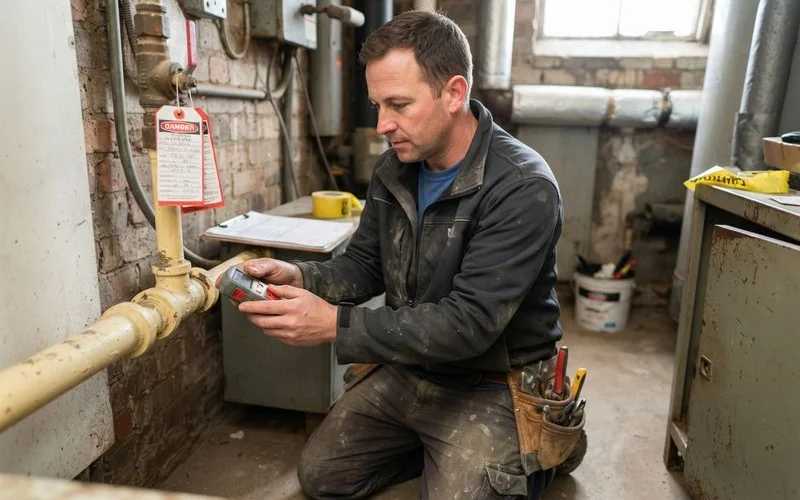
Why this is riskier than a water leak
Natural gas and propane are combustible, which means the danger is not limited to property damage the way a water leak is. A spark near a concentration of leaking gas can ignite. That is the entire reason the response is different: no investigating, no attempted fixes, just distance and a call for help.
After the leak is fixed
Once a technician has repaired the leak, they should pressure-test the line to confirm there is no remaining drop in pressure before relighting pilot lights and reconnecting appliances. Ask them to walk you through what caused the leak and whether any other sections of your gas line are at similar risk, particularly in an older home. If the fix means replacing or rerouting a section of pipe, our guide to gas line permits and codes in South Carolina covers when that work needs a permit. You can find licensed gas line service providers in Columbia if you need to schedule an inspection after the fact, and our methodology explains how we weigh licensing and safety practices when scoring plumbers who handle gas work.
Bottom line
A suspected gas leak calls for leaving the area, avoiding anything that could spark, and calling your gas utility and a licensed plumber from a safe distance. Do not try to locate or repair it yourself. The stakes with gas are different from a plumbing leak, and the response should be too.
FAQ
- What does a gas leak actually smell like?
- Natural gas and propane are naturally odorless, so utilities add a chemical called mercaptan, which smells like rotten eggs or sulfur, specifically so leaks are noticeable. If you smell that odor near an appliance, line, or meter, treat it as a real leak.
- Can a gas leak happen without any smell?
- Rarely, but the odorant can fade over long pipe runs or in specific conditions, and some people have a reduced sense of smell. That is why other signs, like a hissing sound near a line, dead vegetation over a buried line, or unexplained physical symptoms, also matter.
- Should I try to find and fix the leak myself?
- No. Leave the area immediately, do not use anything that could create a spark, and call your gas utility and a licensed plumber with gas certification from a safe distance. Gas line work is not a DIY job given the risk involved.
- How is a gas leak actually repaired?
- A qualified technician locates the leak using a gas detector or a soap-and-water test, shuts off gas to the affected section, repairs or replaces the damaged fitting or pipe, then pressure-tests the line before turning gas back on and relighting pilot lights.